 Lynne Murray | Director of Product Marketing for Data Security
More About This Author >
Lynne Murray | Director of Product Marketing for Data Security
More About This Author >
Lynne Murray | Director of Product Marketing for Data Security
More About This Author >
Lynne Murray | Director of Product Marketing for Data Security
More About This Author >
This time every year, students head back to school with a fresh start. They organize their schedules, clean out old materials, establish new routines, and prepare for the challenges ahead. Organizations should take the same approach to data security.
As organizations enter the second half of the year, many are accelerating digital transformation initiatives, expanding AI adoption, preparing for audits, and supporting new business priorities.
However, as AI adoption grows, many organizations are reaching the limits of traditional scale-out models as data sprawl increases, infrastructure costs rise, and security demands become more complex.
AI Is Changing the Curriculum
In the first half of 2026, AI evolved from a productivity tool into a new security attack surface. Organizations shifted from securing traditional infrastructure to defending against AI-native threats, including prompt injection, autonomous agents, data leakage, model manipulation, and AI-powered social engineering.
According to the IBM 2026 Cost of a Data Breach Report, there has been a 56% increase in AI-driven attacks. The global average cost of a data breach is 4.99M in USD, a 12% increase over last year and a record high—driven by higher detection, escalation and lost business costs.
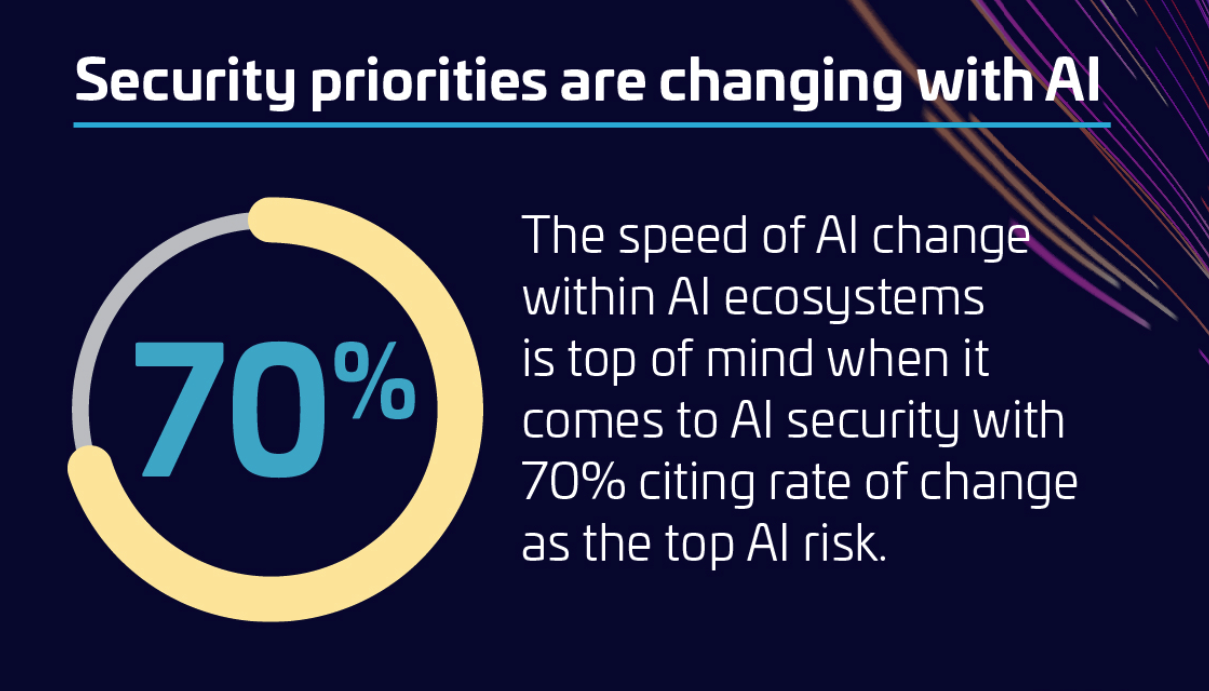
In the 2026 Thales Data Threat Report, 70% of organizations rank AI as top data security risk and 48% have experienced reputational damage as a result of AI-generated misinformation.
At the same time, rapid AI adoption accelerated data growth, increased infrastructure spending, amplified operational complexity, and expanded organizational risk.
These pressures, combined with AI-driven security gaps, cloud cost overruns, and stricter governance requirements, exposed the limits of traditional scale-out architectures. As a result, organizations are increasingly seeking more consolidated, resilient, and cost-efficient platforms to support secure AI-driven growth.
Is Your Backpack Ready?
Imagine walking down a school hallway. Most students carry a backpack stuffed with books, assignments, devices, notes, and personal items, everything they need to succeed. If it's disorganized, overloaded, or left unprotected, important things get lost, stolen, or damaged.
In the AI era, the backpack is your data ecosystem:
- Sensitive data
- Intellectual property
- Customer information
- Financial records
- AI training and inference data
- Policies and governance controls
AI is creating more bulk to an already overloaded backpack. The backpack is already bursting at the seams, and the load either needs to be redistributed, or less valuable items need to be reduced.
The challenge is that many organizations have spent years filling the backpack, and AI is accelerating the pace.
Hallway Lockers v. Securing Data in an AI-Driven World
As students head back to school, they know their most valuable belongings shouldn't be carried around unprotected. Instead, they store them in a locker secured with a unique combination or key, providing a trusted layer of protection.
In the on-premises era, traditional security focused on protecting the hallway and the locker. With the acceleration of digital transformation, cloud security expanded to protecting valuable assets distributed everywhere. Data is no longer sitting in one place. It moves constantly between laptops, mobile devices, and cloud services. Every transfer creates new opportunities for exposure, making traditional "backpack and locker" security approaches harder to manage.
In the AI era, the priority shifts to prioritizing and protecting the most valuable contents, because data is constantly moving, being analyzed, and being used by humans and AI alike. As AI increases both the value of data and the ways it can be accessed, protecting that data starts with a secure foundation.
The "Back-to-School" Data Security Report Card
Just as schools measure success by outcomes, organizations should measure data security by business results. The questions that matter are simple: Are we reducing risk? Protecting sensitive data? Enabling AI innovation safely? Maintaining compliance? Preserving customer trust?
| Grade Category | Outcome Metric |
|---|---|
| Visibility | Do we know where sensitive data resides? |
| Protection | How much critical data is protected? |
| Access | Who can access our most valuable data? |
| Compliance | Are we prepared for audits and regulations? |
| AI Readiness | Can we enable AI without increasing risk? |
| Risk Reduction | Are we reducing exposure over time? |
| Business Impact | Are we enabling innovation safely? |
Grading your data security efforts with measurable results
A mature organization should be able to report outcomes like:
- Reduced sensitive data exposure by 60%
- Reduced excessive access by 70%
- Cut audit preparation effort by 50%
- Reduced remediation times from months to days
- Enabled 100% of strategic AI projects with approved data governance controls.
These are the kinds of metrics that move the conversation from security activities to business outcomes, The most effective organizations continuously refine their approach by reducing unnecessary data exposure, strengthening access controls, improving governance, prioritizing risk-based remediation, and securing data consistently across cloud, SaaS, AI, and on-premises environments.
Because the goal isn't better visibility. It's better decisions.
No executive measures success by the number of scans run, policies created, or dashboards deployed. Success is measured by outcomes: protecting critical information, reducing risk, accelerating innovation, and building trust.
The organizations best positioned for the AI era won't be those with the most security tools. They'll be the ones that have built the strongest data protection foundation, enabling innovation to scale securely and confidently.
That's a report card every organization wants to bring home.