Containerized applications help organizations innovate faster, but they also introduce new challenges for securing sensitive data. CipherTrust Transparent Encryption for Kubernetes (CTE-K8) helps protect data through encryption, granular access controls, and audit logging, with centralized policy management through CipherTrust Manager (CM).
Key outcomes:
- Reduce data exposure risks
- Simplify compliance efforts
- Protect Kubernetes workloads at scale
Protect Kubernetes Data With Greater Confidence
Apply consistent data protection controls across Kubernetes workloads and storage environments.

Simplify Compliance
Use encryption, access controls, and audit logging to support data protection and audit requirements across Kubernetes deployments

Reduce Privileged Risk
Apply policy-based controls that restrict protected data access while infrastructure teams continue managing Kubernetes environments

Secure Container Workloads
Use consistent controls for container data and mounted storage across data centers, virtualized environments, and public clouds
Talk to a Data Security Expert
Discuss your Kubernetes data protection requirements with a Thales specialist.
Data Protection for Kubernetes Workloads
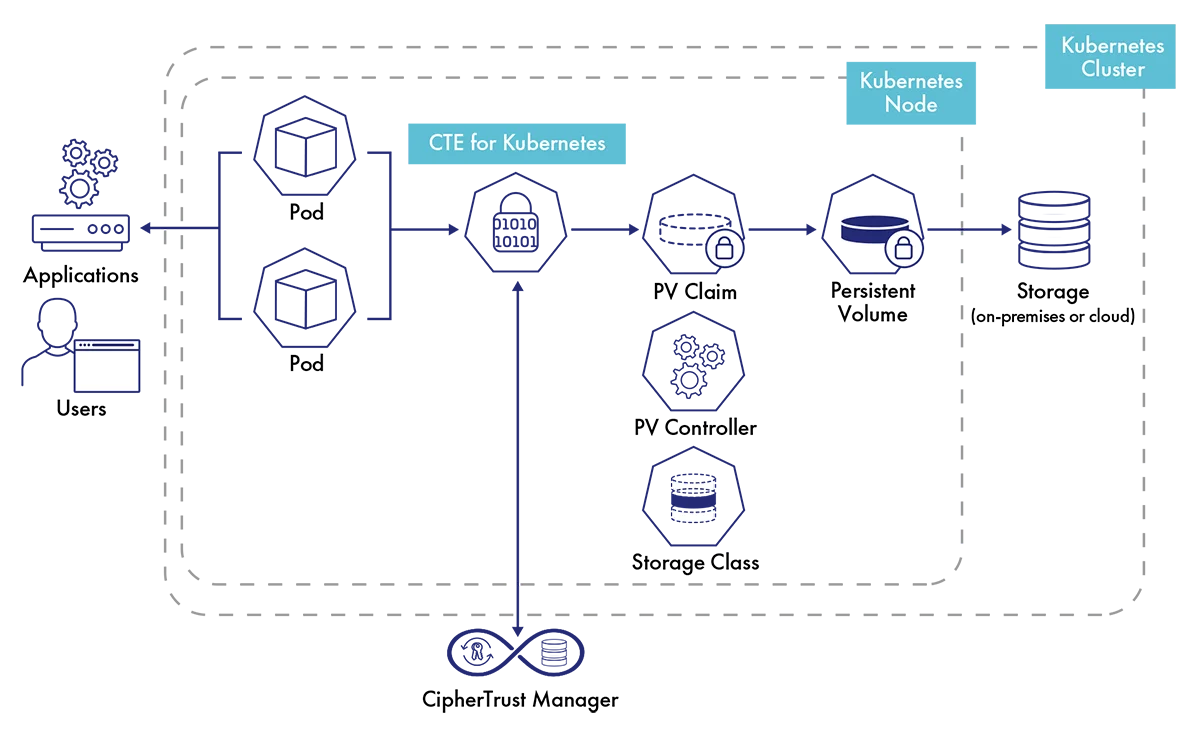
Kubernetes data security solutions help organizations protect sensitive information used and generated by containerized applications. CipherTrust Transparent Encryption for Kubernetes extends CipherTrust Transparent Encryption by applying encryption, access controls, and audit logging inside Kubernetes environments. Policies are managed centrally through CipherTrust Manager while protection is applied to container-resident data and mounted storage.
Securing Sensitive Data in Modern Kubernetes Environments
Organizations are adopting Kubernetes to deploy and manage containerized applications, but shared infrastructure, privileged administration, multi-tenant workloads, and compliance obligations create additional data security challenges.
Infrastructure-level controls may not provide the file- and data-level visibility needed inside containers. Misconfigured role-based access controls, shared storage, overly permissive volume mounts, and weak namespace isolation can increase the risk of unauthorized data exposure.
Thales recommends complementing Kubernetes infrastructure protections with data-centric controls. Encryption, granular access controls, audit logging, and centralized policy management can establish safeguards around sensitive data wherever Kubernetes workloads operate.
Data Security Capabilities for Kubernetes Environments
Apply encryption, access controls, and audit logging on a per-container basis. Protect data stored locally within containers and data mounted through network file systems.
Apply transparent protection without changes to applications, containers, or infrastructure. Use one policy across a Kubernetes cluster or unique policies for individual containers.
Enforce policies based on users, processes, and resources within containers. Isolate workloads so only authorized containers can access protected sensitive data.
Manage data encryption, access controls, and logging policies centrally through CipherTrust Manager while protections are applied within Kubernetes environments.
Featured resource
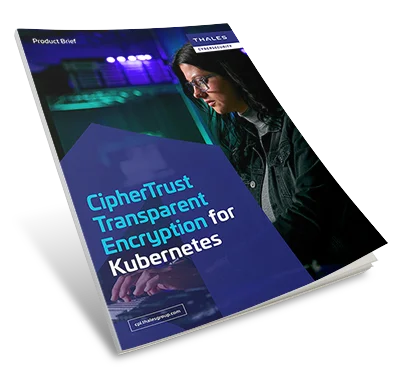
Kubernetes Protection With CipherTrust Encryption
Learn about Kubernetes data security challenges and how encryption, access controls, and audit logging can help protect containerized data.
Related resources

Frequently asked questions
It extends CipherTrust Transparent Encryption with encryption, access controls, and audit logging for Kubernetes environments, with centralized management through CipherTrust Manager.
It can protect data stored locally within containers and data available through mounted storage resources used by Kubernetes workloads.
Protection can be applied without changes to applications, containers, or underlying infrastructure.
Encryption, granular access controls, and audit logging can support requirements for protecting sensitive data, restricting access, and producing audit trails.
Security policies are centrally managed through CipherTrust Manager while protections are applied within Kubernetes environments.