What is a Hardware Security Module?
A hardware security module (HSM) is a dedicated cryptographic processor that generates, protects, stores, and uses cryptographic keys inside a hardened, tamper-resistant hardware boundary. HSMs act as trust anchors for encryption, signing, authentication, and other critical operations that support secure applications, transactions, identities, and digital services.
What Makes Thales the Best HSM Vendor?
Thales HSMs are trusted by enterprises, financial institutions, governments, and cloud providers to protect cryptographic keys, secure high-value workloads, support compliance, and establish a hardware root of trust for digital operations across on-premises, cloud, hybrid, and payment environments.

Protect Critical Trust
Protect cryptographic keys and sensitive operations inside tamper-resistant, FIPS-validated hardware, where keys never leave the secure boundary.

Meet Compliance Needs
Support security and regulatory requirements with certified HSMs designed for rigorous validation, auditability, and standards such as FIPS, Common Criteria, PCI DSS, eIDAS, GDPR, and more.

Scale Crypto Operations
Support high-volume cryptographic workloads across on-premises, cloud, and hybrid environments with flexible deployment models and broad integration support.

Prepare for PQC
Advance crypto agility and post-quantum readiness with HSM strategies designed to help organizations adapt to emerging standards and long-term security requirements.

Simplify Operations
Use centralized management, reporting, monitoring, and resource partitioning to simplify deployment and reduce complexity across cryptographic environments.
Thales HSMs Are Ranked #1 on PeerSpot
Meet the Next-Generation Luna 8
Industry-leading PQC performance, delivered on the all-new quantum-safe Thales HSM platform
Introducing a new Thales Luna HSM built to help organizations establish a quantum-safe root of trust. Luna HSM 8 combines crypto agility, native post-quantum cryptography support, stronger security isolation, multi-tenant scalability, and management APIs designed to simplify automation, monitoring, and operational integration.
Luna 8 at a Glance

Quantum-Safe from the Ground Up
Transition to quantum-safe cryptography with PQC algorithms and quantum-safe root of trust
Thales-Designed Crypto Processor
Optimized for high-volume PQC operations

Automation & Scalability
Automate administration & integrate IT infrastructure tools for easy deployment & scalability

Crypto Agility
Modern Architecture for faster updates and new crypto mechanisms

Seamless Migration
Easy migration from Luna 7 with compatible APIs and key migration solution
Explore the Thales HSM Portfolio
Thales has an extensive HSM portfolio to help meet diverse business and security needs across environments, while staying ready for emerging technologies and future security requirements:
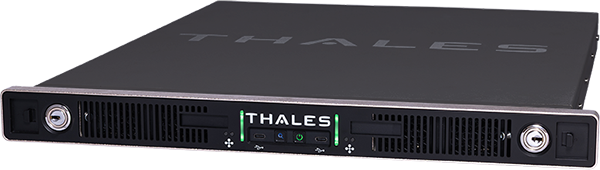
Thales Luna: Your Trusted General Purpose HSM
Luna HSMs have led the general-purpose HSM market for over 30 years, delivering a crypto-agile, quantum-safe foundation of trust for securing keys, identities, data, and applications. Built for high performance, scalability, and compliance, with FIPS 140-3 and Common Criteria certifications, helping meet the most stringent security and regulatory requirements.
Thales payShield: Best-in-Class Payment HSM
Secure every payment card transaction with Thales payShield, that protects 80% of global POS transactions. Prevent fraud, accelerate time-to-market, ensure PCI DSS and EMV compliance, and scales confidently with high-performance cryptography built for today and tomorrow’s payment ecosystems.

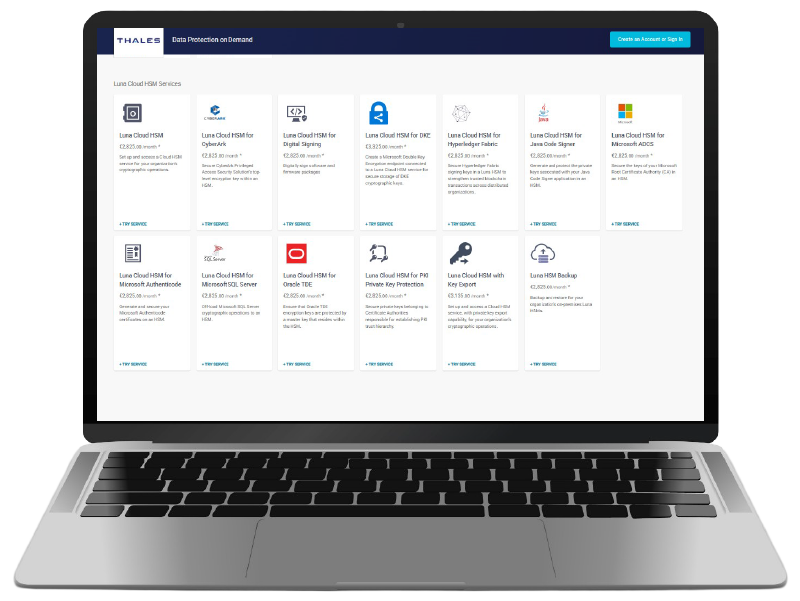
Thales Cloud HSM Services: Your On-Demand HSMs
Luna Cloud HSM and payShield Cloud HSM deliver HSM-as-a-Service capabilities for protecting cryptographic keys, applications, sensitive data, and payment transactions in cloud and hybrid environments. Available through the Thales Data Protection on Demand marketplace, they provide dedicated, FIPS-certified hardware security with rapid deployment, elastic scalability, and simplified operations.
Seamless Integrations with Thales HSMs
Thales Hardware Security Modules power one of the industry's largest partner ecosystems, supporting applications, identities, payments, and transactions. With extensive third-party integrations and custom solutions, Thales helps organizations secure sensitive data and critical workloads worldwide.























A Hardware Root of Trust for Modern Security Needs
As digital services expand across cloud, hybrid, and complex environments, organizations need trusted cryptographic infrastructure for PKI, payment security, code signing, key protection, and post-quantum readiness.
Thales helps build a stronger hardware root of trust with the control, flexibility, compliance support, and crypto agility needed to protect critical operations today and adapt as requirements evolve.
Prepare for Post-Quantum Cryptography
Build crypto agility into key protection strategies so organizations can adapt as PQC standards and requirements evolve.
Secure PKI and Certificate Authorities
Protect CA keys and signing operations that establish trusted identities for users, devices, applications, and services while supporting audit and compliance requirements.
Protect Payment Transactions
Secure payment credentials, PINs, EMV processes, card issuance, and high-volume transaction workflows while supporting PCI DSS, EMV, and other payment security requirements.
Enable Code Signing and Software Integrity
Safeguard signing keys used to verify software, firmware, containers, and DevOps release pipelines.
Strengthen Cloud and Hybrid Key Protection
Maintain control of cryptographic keys across cloud, on-premises, and hybrid environments to support security, sovereignty, and regulatory requirements.
Contact an HSM Expert
Discuss the right HSM approach for your environment, compliance goals, and strategy.
Featured resource
HSM Buyer’s Guide
Learn what to consider when choosing an HSM vendor, including certifications, deployment flexibility, integrations, scalability, operational control, and post-quantum readiness.
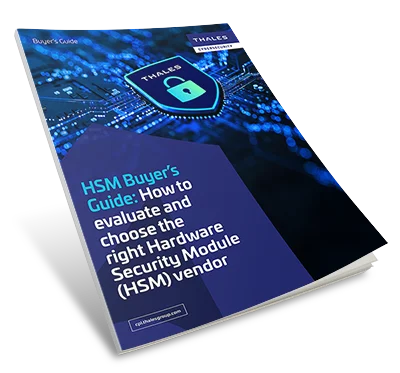
Explore HSM resources



Common Questions About Hardware Security Modules
What is a hardware security module (HSM)?
A hardware security module is a dedicated cryptographic processor that protects cryptographic keys inside tamper-resistant hardware and performs critical operations such as encryption, signing, and authentication within a secure boundary.
What is the purpose of hardware security modules?
Enterprises buy hardware security modules to protect transactions, identities, and applications, as HSMs excel at securing cryptographic keys and provisioning encryption, decryption, authentication, and digital signing services for a wide range of applications.
When should an organization use an HSM?
Organizations typically use an HSM when they need a high-assurance hardware root of trust to protect cryptographic keys, secure critical operations such as PKI or code signing, and support stringent compliance or audit requirements.
What is the difference between a general-purpose HSM and a payment HSM?
General-purpose HSMs support broad enterprise cryptographic use cases such as PKI, TLS, code signing, database encryption, and digital identity. Payment HSMs are purpose-built for payment workflows such as PIN processing, card issuance, EMV, and transaction security.
What is the difference between cloud HSM and on-premises HSM?
Cloud HSM services provide on-demand access to HSM capabilities through cloud delivery models, while on-premises HSMs are dedicated appliances managed within customer environments. Many organizations use a mix of both to support hybrid strategies.
What is the difference between an HSM and a key management system (KMS)?
An HSM provides hardware-based key protection and secure cryptographic operations, while a key management system typically manages key lifecycle, policy, and orchestration functions. Organizations often use HSMs when they need stronger hardware-backed protection for key material.
Why is post-quantum cryptography important for HSM strategy?
Post-quantum cryptography matters because organizations need cryptographic infrastructure that can adapt to new algorithms and protect long-lived data and trust systems against emerging threats, including harvest now, decrypt later risks.
What are types of HSMs are available? How can they be deployed?
Hardware Security Modules (HSMs) are available in several form factors and deployment models to support different security, performance, and operational requirements. Thales offers network-attached HSMs (Luna Network HSM) for centralized enterprise deployments, embedded PCIe HSMs (Luna PCIe HSM) for low-latency application integration, USB-connected HSMs (Luna USB HSM) for portability and development use cases, cloud-based HSM-as-a-Service offerings (Luna Cloud HSM and payShield Cloud HSM), and dedicated backup HSMs (Luna Backup HSM) for key backup and disaster recovery.