 Krishna Ksheerabdhi | VP, Product Marketing
More About This Author >
Krishna Ksheerabdhi | VP, Product Marketing
More About This Author >
Krishna Ksheerabdhi | VP, Product Marketing
More About This Author >
Krishna Ksheerabdhi | VP, Product Marketing
More About This Author >
Key Takeaways:
- Secrets management, encryption, and key management collectively help organizations prevent unauthorized access to sensitive data and systems to avoid data breaches and identity theft or manipulation.
- Credentials and secrets are some of the most targeted assets and the primary vector of data breaches. In turn, secret-centered security solutions are appropriately targeted tools for safeguarding against emerging threats.
- Choosing the right secrets management solution requires considering multiple factors, chief among them its cloud-agnostic nature.
- For secrets management to be truly effective, enterprises must stay abreast of emerging threats and adjust their responses accordingly.
Whether hosted in the cloud or on-premises, modern applications and integrations have accelerated the need for digital secrets. These secrets control data access when transferred between applications—sending information from a webpage, making a secure request to an API, accessing a cloud database, or countless other cases that modern enterprises encounter while pursuing digital transformation and increasing automation.
However, for access control to be robust, businesses must effectively manage the respective secrets across their lifecycle and protect them from compromise. This is precisely what secrets management ensures.
What is secrets management?
Secrets management refers to tools and methods to securely store, access, and centrally manage the lifecycle of digital authentication credentials. This includes sensitive data such as passwords, encryption keys, APIs, tokens, and certificates. These secrets authenticate a user or machine to access applications or services within an organization’s IT ecosystem.
By minimizing the role of humans in secrets management, organizations can avoid data breaches, identity theft, and other identity-related problems by using a methodical approach to prevent unauthorized access to sensitive data and systems.
Key concepts of secrets management
What is a secret?
In cybersecurity, the simplest definition of a secret is any private digital credential used to authenticate or otherwise authorize access to sensitive or confidential systems, applications, or data. In that sense, the most well-known example of a secret is a password.
Secrets are vital to unlocking protected resources or sensitive information across tools, applications, containers, DevOps, cloud-native environments, and other digital access points in an enterprise’s ecosystem.
The most common types of secrets include:
- Privileged account credentials
- Passwords
- TLS/SSL certificates
- SSH keys
- API keys
- Encryption keys
Although human-related passwords are the most well-known type of secret, non-human secrets are far more numerous and more challenging to manage and secure. With the proliferation of non-human identities, including IoT devices, applications, APIs, containers, microservices, and now AI agents operating with delegated authority, machine secrets have grown faster than the controls governing them. Automated lifecycle management is necessary to limit both the likelihood and the impact of a compromise.
The challenges of secrets management
Poor secrets management exposes your organization to significant cyber risk, and for years, the primary culprit of this risk was compromised credentials. However, the landscape has shifted.
According to the 2026 Verizon Data Breach Investigations Report, the exploitation of software vulnerabilities has overtaken stolen credentials as the leading initial access vector for the first time in the report's 19-year history. Software vulnerabilities now account for 31% of breaches, compared to 13% for credential abuse.
Yet, this shift doesn’t make credentials any less critical to your security posture. Once attackers exploit a software vulnerability to gain an initial foothold into your enterprise ecosystem, stolen secrets such as API keys, tokens, and administrative credentials provide the exact mechanism attackers need to navigate to sensitive data. Secrets are still important keys to your digital kingdom.
Keep reading to learn more about the challenges of secrets management.
Secrets sprawl
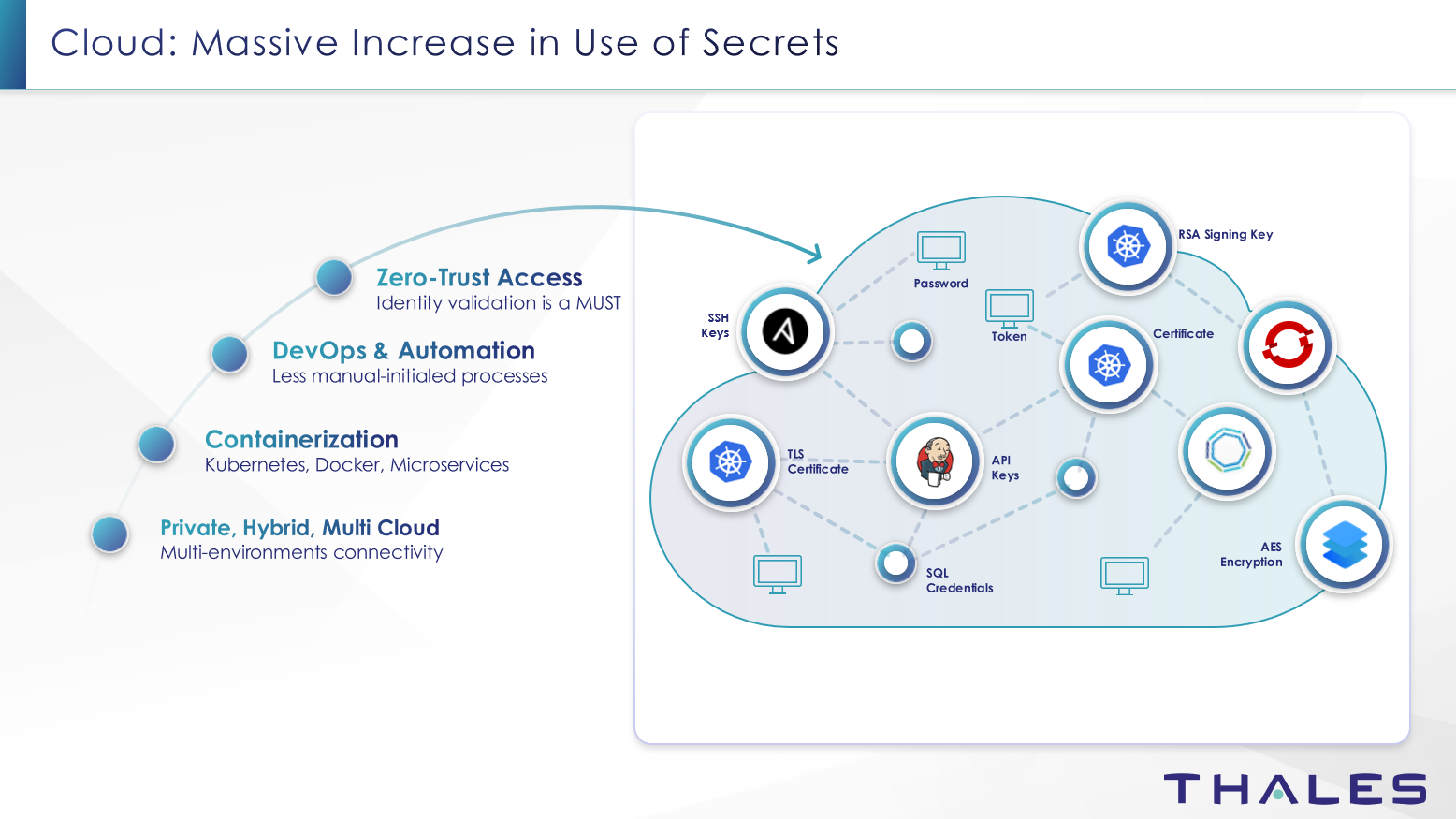
In addition to the common uses of secrets mentioned above, secrets are also embedded as hard-coded credentials in containerized applications, Robotic Process Automation (RPA) platforms, business-critical applications, including both internally developed and commercial off-the-shelf solutions (COTS), and the Continuous Integration/Continuous Deployment (CI/CD) pipeline. This creates a much more pervasive occurrence of secrets that is referred to as the secrets sprawl.
Lack of comprehensive visibility
Managing enterprise credentials becomes more difficult when security teams lack clear insight across the enterprise’s ecosystem. As noted above, credential theft is still a significant issue: The 2026 Thales Data Threat Report notes that 67% of organizations report that credential theft and misappropriated secrets are actively increasing.
This trend reveals a critical misalignment in enterprise risk management. Per the Thales report, while 63% of organizations rank nation-state attackers among their top three concerns, human error actually remains the leading cause of data breaches at 28%.
How does such a misalignment occur?
When team members manage secrets individually across decentralized environments, this gap between perceived threat and actual exposure widens. Without unified visibility spanning all IT ecosystems, your security teams are left blind to basic human oversights, making auditing nearly impossible and leaving critical cloud assets exposed to initial access.
Hardcoded default secrets
Hardcoded default credentials are frequently distributed and deployed with applications and IoT devices, and they are straightforward to crack using scanning tools and dictionary-style or guessing attacks. Secrets are also routinely hardcoded in scripts or files for DevOps technologies, endangering the security of the entire automated process.
DevOps tools
DevOps environments are where the challenges of managing secrets are amplified. DevOps teams typically leverage dozens of orchestrations, configuration management, and other tools and technologies like Ansible or Docker, relying on automation and other scripts that require secrets to work. These secrets should all be managed according to best security practices, including credential rotation, time/activity-limited access, auditing, and more.
Manual secrets management processes
Manual processes are known to be cumbersome and error prone. Poor management means secrets are not likely to remain secret, opening the opportunity for breaches. Generally, the more manual secrets management processes equate to a higher likelihood of security gaps and malpractices.
AI agents and non-human identities
The rise of autonomous AI agents is fundamentally altering how organizations must approach secrets management. Traditionally, authentication models assumed a human was in control, operating within predictable hours and defined application boundaries.
Today, non-human identities outnumber human users, and autonomous AI agents are acting as full participants in digital ecosystems. Consider findings from the 2026 Thales Bad Bot Report, which indicates that automated traffic accounts for 53% of all internet activity, with 27% of bot attacks targeting APIs directly. These agents bypass traditional user interfaces entirely, interacting directly with backend systems using valid authentication credentials.
Such a transformation presents a critical governance challenge. The Thales threat report reveals that identity is a key attack surface, with AI systems being increasingly treated as "trusted insiders." Organizations routinely grant AI agents broad, persistent access to sensitive data repositories and execution environments — often with far fewer controls than their human counterparts, as 2026 security research finds that only 33% of AI agents are provisioned with lease-privilege access.
When a credential holder transitions from a human to an autonomous agent executing high-velocity workflows, persistent API keys become extreme liabilities. A single compromised, long-lived token allows an agent, or an adversary hijacking its context, to systematically exfiltrate data or alter backend infrastructure at machine speed.
To mitigate this exposure, agentic workflows require short-lived, just-in-time (JIT) credentials. Secrets must be dynamically issued for specific, tightly scoped tasks and automatically revoked the moment execution completes, ensuring that compromised tokens don’t present an opportunity for attackers to move laterally within the ecosystem.
To note, auditing non-human identity usage requires a shift in logging standards. Auditing a human user typically involves tracing actions back to a single identity and a clear set of manual inputs. Auditing an autonomous AI agent, however, requires capturing contextual metadata, system prompts, API call chains, and dynamic access authorizations.
Security teams must be able to evaluate not just who authenticated, but whether the agent’s machine-speed behavior aligns with intended business logic. This approach would enable the teams to detect and neutralize misconfigurations or hijacked agents before causing systemic damage.
The need for enterprise secrets management solutions and best practices
Enterprise secrets management tools and best practices can resolve these challenges and prevent unauthorized access to sensitive data, reducing the risk of data breaches and unauthorized manipulation of sensitive corporate and personal data. These can have disastrous consequences for an organization, including direct financial loss, reputational damage, legal exposure, and regulatory fines.
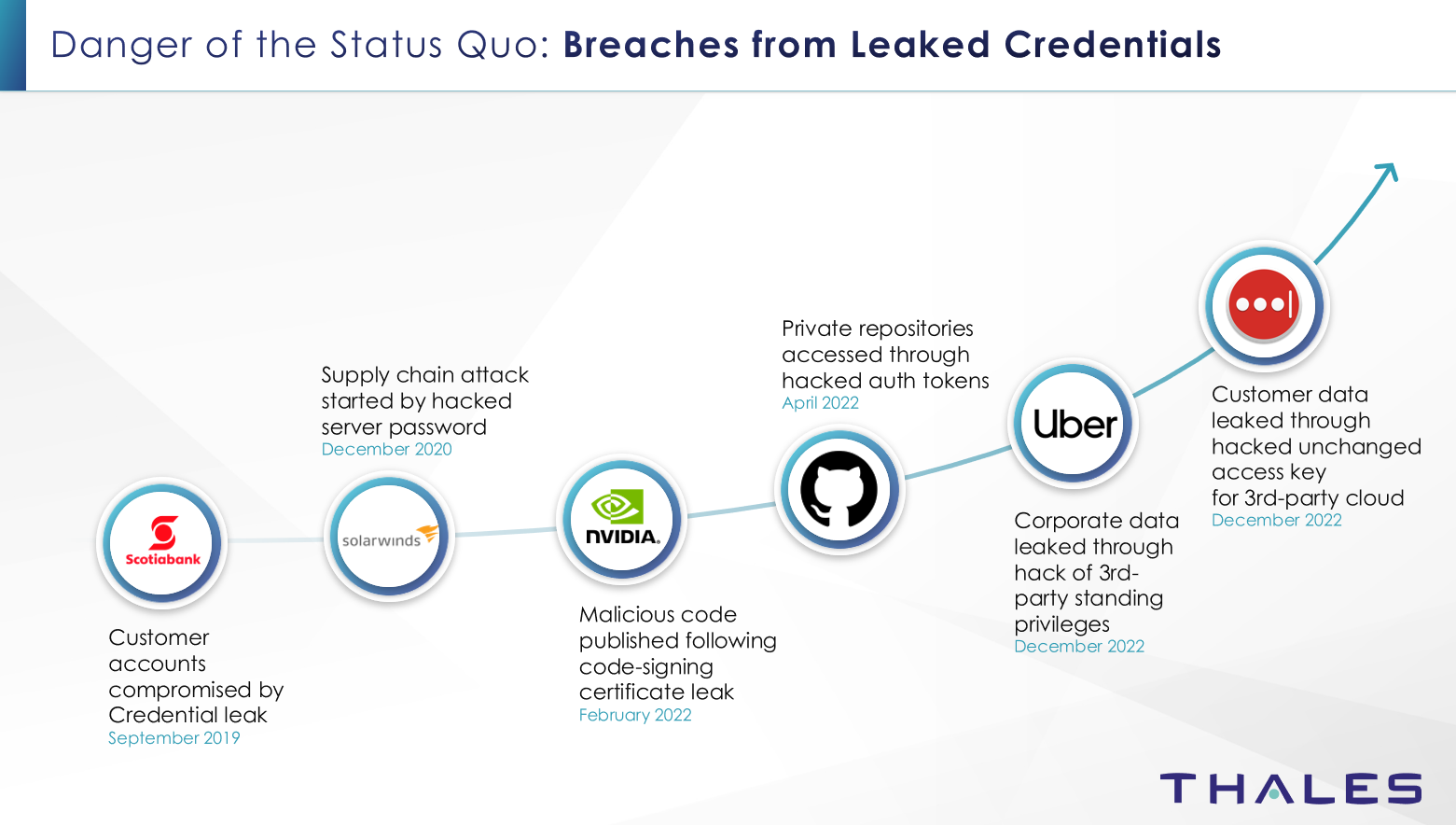
Businesses use secrets management solutions to manage their IT ecosystem’s secrets centrally. These tools and established best practices reduce the risks associated with poor and manual secrets management, such as hardcoding secrets into scripts, using default passwords, manually sharing passwords, and failing to rotate credentials. Secrets management tools replace manual processes and provide centralized visibility, monitoring, and management for secrets across the enterprise.
The foundation of secrets management is identifying all the types of secrets within the organization, where they are located, and continuously maintaining an inventory. Besides creating the inventory, it is equally essential to identify all the secrets management use cases, such as to secure CI/CD pipelines, containers, ephemeral environments, IoT devices, RPA processes, and internally developed applications.
This comprehensive inventory can help organizations monitor and audit secrets more effectively for security and compliance purposes. Auditing is an essential part of secrets management due to the nature of the process. At a minimum, organizations should monitor and audit who requested a secret and for what system and role, when the secret was used and by whom, when the secret has expired, and more.
Secrets management best practices
The following are the pillars of an effective and efficient secrets management process:
- Create a comprehensive secrets inventory. This is the foundation of secrets management. You can’t protect something you don’t know. Take the time to cover all the secrets used throughout your organization.
- Create a comprehensive secrets management policy. The policy should set strict rules governing the lifecycle of secrets (strength, expiration, rotation, revocation) while prohibiting the use of default or hardcoded secrets.
- Automate, automate, automate. Remove the human element from the secrets management process, and rely on automation platforms to create, manage, distribute, and maintain secrets.
- Encrypt data using a Key Management solution. A key management solution to encrypt data at rest, in transit, and in use stores and manages keys and provides them automatically when data needs to be encrypted or decrypted. It also makes it possible to encrypt each dataset or resource with a different encryption key, controlling access more granularly.
- Rotate secrets frequently. Secrets should be changed regularly to limit the impact of a potential compromise. If a secret remains unchanged for a long time, more users and systems gain access to it and can potentially compromise it. When using a secrets management tool, ensure using its rotation functionality and set rotation to a sufficiently high frequency.
- Segregate duties and separate data from secrets. It is always a best practice to segregate duties and keep secrets separate from data to limit the potential of a breach affecting both assets.
- Manage privileges. It is important to follow the principle of least privilege, in which a user or application is only granted privileges if necessary to perform its role. When access is no longer needed, it should be revoked. Privileged sessions should be carefully monitored to improve monitoring and accountability.
- Detect unauthorized access. Breaches are a matter of when and not if. Ensure having a robust process for monitoring and identifying unauthorized access and establish an incident response process to mitigate breaches and reduce the impact on the organization.
- Train your employees. Training your employees across all departments on secrets management best practices is essential. It is the best way to enforce the secrets management policy and best practices and limit the possibility of costly mistakes and oversights.
Tips for choosing a secrets management tool
Using a dedicated secrets management solution is the best course of action for any enterprise. Example solutions include AWS’s Secret Manager, Google’s Secret Manager, and Microsoft Azure’s Key Vault.
For flexibility and freedom, however, especially if you’re implementing a multi-cloud strategy, choose a cloud-neutral option that allows you to use a single secrets management solution across all cloud platforms (and potentially on-premises as well).
Here are a few tips to choose the best option for your enterprise:
- Do market research and identify the types of secrets management tools available, including open-source and commercial solutions.
- Consider the organization's specific needs and use cases when selecting a secrets management tool. Consider if the identified tools satisfy current and future business needs. As your organization expands to more environments and regions, it is essential for the solution to include scalable integration capabilities with support for a wide variety of plugins.
- Evaluate the level of security and encryption provided by the tool. Do the solutions provide options for secrets rotation, just-in-time access, and encryption with adequate resistance against quantum threats?
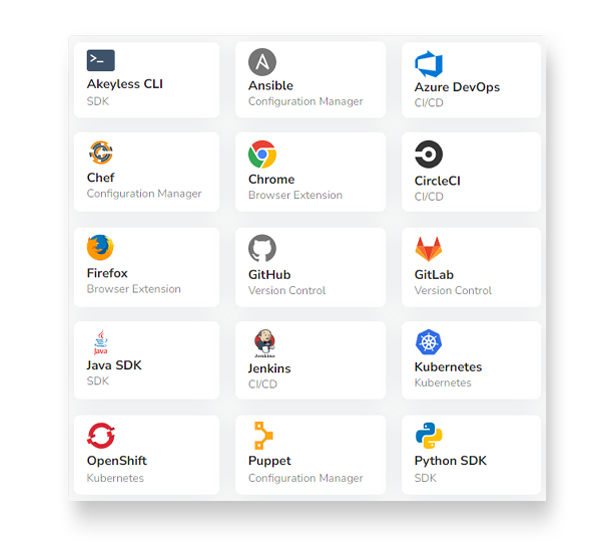
- Consider the ease of integration with other tools and systems in the organization's environment. The right platform should allow seamless cross-platform, cross-environment workflows. The selected solution should be completely agnostic and work in cloud and legacy IT environments. In addition, it must support integrations with the most common cloud platforms, such as Kubernetes and Docker.
- Evaluate the level of support and documentation provided by the tool's vendor or community.
- Consider the cost and budget constraints when selecting a secrets management tool. Hidden costs may increase expenditures, making the solution not a cost-effective option.
- Keep in mind any regulatory or compliance requirements that may impact the selection of a secrets management tool. Data sovereignty and localization requirements may limit your options, and you should look for solutions that provide compliance per jurisdiction.
- Consider conducting a proof of concept or trial of the tool before making a final decision. This is essential to ensure the tool does what it promises.
DATABASE PROTECTION
How Thales approaches enterprise secrets management
CipherTrust Secrets Management is a state-of-the-art tool powered by Akeyless Vault that secures secrets across multiple clouds and offers seamless integrations with GitHub, Kubernetes, OpenShift, and many more DevOps applications.
Thales has been named an Overall Leader in the 2025 KuppingerCole Leadership Compass for Enterprise Secrets Management.
Need help? Explore our CipherTrust Secrets Management solution, or contact one of our cybersecurity experts for help building a secrets management strategy that's right for your organization.