 Sarah Lefavrais | IAM Product Marketing Manager
More About This Author >
Sarah Lefavrais | IAM Product Marketing Manager
More About This Author >
Sarah Lefavrais | IAM Product Marketing Manager
More About This Author >
Sarah Lefavrais | IAM Product Marketing Manager
More About This Author >
The Passwordless Imperative
For decades, passwords have been the default mechanism for securing digital access. They are deeply embedded in enterprise systems and workflows, yet they were never designed to withstand today’s threat landscape.
Passwords are easy to steal, easy to reuse, and costly to manage at scale. Despite years of awareness training and layered defenses, credential-based attacks remain one of the most common causes of security breaches. At the same time, password resets continue to consume a disproportionate share of IT support resources, slowing productivity across the organization.
These challenges have pushed enterprises toward a turning point. Regulatory bodies increasingly call for phishing-resistant authentication. Cyber-insurance providers scrutinize identity controls more closely. Business leaders demand stronger security without operational friction. And employees, accustomed to unlocking personal devices instantly, expect the same simplicity at work.
Taken together, these pressures make one conclusion unavoidable: passwords are no longer fit for purpose. Moving beyond them is no longer a question of innovation, but of necessity.
However, necessity alone does not guarantee success.
Where Passwordless Initiatives Often Stall
Many organizations recognize the urgency of going passwordless. They invest in modern authentication technologies, launch pilot programs, and define clear security objectives. Yet despite these efforts, initiatives frequently lose momentum during deployment.
This is rarely because the security model itself is insufficient. More often, it is because the user experience has not been fully considered.
When new authentication methods introduce friction, uncertainty, or unfamiliar behaviors, users hesitate. They worry about losing access, being slowed down during critical tasks, or having to change long-standing habits. Even small inconveniences can lead to resistance or workarounds, weakening adoption over time.
At the same time, organizations cannot afford to lower their security standards. Phishing remains highly effective precisely because it targets human behavior. Enterprises therefore face a dual requirement that is difficult to balance.
The real challenge is not choosing between stronger security and user adoption. It is delivering authentication that significantly increases security while remaining simple enough to be adopted naturally, at scale.
This is where the combination of FIDO standards and biometrics fundamentally changes the dynamics of passwordless authentication.
Why FIDO and Biometrics Unlock Adoption
FIDO2 addresses the core weaknesses of passwords by eliminating shared secrets altogether. Instead of relying on something that can be guessed or stolen, authentication is based on public-key cryptography. No reusable credential exists for attackers to phish, replay, or compromise.
Biometrics complete this security model by removing friction from the user experience. A fingerprint or facial recognition gesture is intuitive, familiar, and already embedded in everyday digital behavior. There is nothing to remember, nothing to type, and nothing to retrieve.
Together, FIDO and biometrics deliver what enterprises have long sought but rarely achieved: stronger security that feels easier than passwords. Authentication becomes faster, more reliable, and more natural, encouraging consistent use rather than resistance.
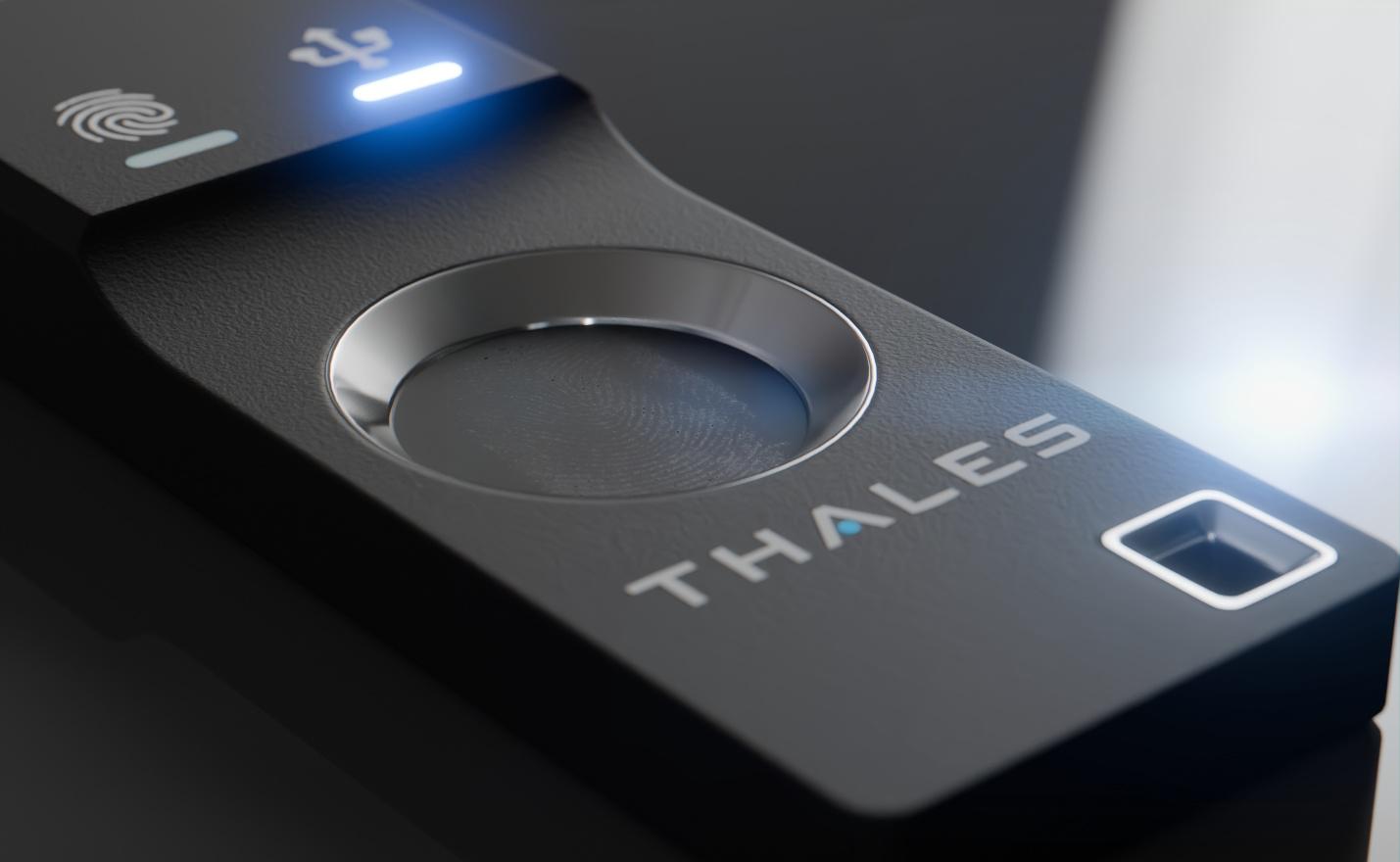
With the support of Thales, organizations can deploy FIDO and biometric authentication across multiple form factors to adapt to different people, roles, and environments. Whether authentication is delivered through hardware-based security keys with the SafeNet eToken Fusion Bio , and SafeNet IDPrime FIDO Bio Smart Card , or mobile applications with the Mobile Protector, the experience remains consistent: phishing-resistant security combined with effortless user interaction.
Industry Use Cases: Passwordless That Fits the Real World
Banking and Financial Services
Banking environments are characterized by frequent authentication, strict regulatory oversight, and a mix of modern and legacy systems. Employees move constantly between applications, making long login cycles a drain on productivity, while sensitive activities such as transaction approval and digital signing demand the highest level of assurance. In this context, biometric-based FIDO authentication enables fast, phishing-resistant access for daily workforce workflows, while hardware-based methods combining modern passwordless standards with certificate-backed authentication support regulated operations.
At the same time, banks face growing pressure on the consumer side to fight online fraud and account takeover. Passwords are no longer sufficient to protect digital banking customers. By introducing passkeys based on FIDO standards, banks can offer their customers a passwordless experience secured by device-bound cryptographic credentials. Consumers can authenticate using the biometrics on their smartphones, such as fingerprint or facial recognition, or choose hardware security keys with built-in fingerprint verification for higher-assurance use cases. This approach dramatically reduces phishing risk while delivering a seamless, modern digital banking experience.
Manufacturing and Industrial Environments
Manufacturing and industrial organizations rely on frontline workers who frequently access shared desktops and critical systems containing sensitive operational data. In these environments, authentication must be fast, reliable, and secure, without introducing friction that slows down operations.
FIDO-based biometric authentication using hardware security keys is particularly well suited to these scenarios. Workers can authenticate instantly by inserting a USB token and verifying their fingerprint, gaining secure access to applications and systems without passwords. Because authentication is device-bound and phishing-resistant, access remains secure even in shared workstation environments. This approach enables quick shift transitions, protects sensitive industrial data, and ensures that strong authentication does not disrupt productivity on the factory floor.
Government and Public Sector
Public-sector organizations must meet high assurance requirements while supporting diverse user populations and long technology lifecycles. Employees often require access to both modern cloud services and legacy or regulated systems, sometimes alongside physical access controls.
In this environment, FIDO and biometric authentication enable agencies to modernize without breaking existing workflows. Biometric-based FIDO authentication provides intuitive, phishing-resistant access to modern applications, while hardware authenticators that combine FIDO with PKI continue to support legacy use cases such as certificate-based authentication, digital signing, and regulated system access. This hybrid approach allows government organizations to adopt modern passwordless standards while preserving critical PKI investments, enabling a secure and gradual transition toward a future-ready identity model.
When Security and Adoption Move Together
When authentication aligns with how people actually work, security stops being perceived as a barrier. Users authenticate naturally. IT teams regain efficiency. Compliance becomes easier to enforce and demonstrate.
Passwordless authentication succeeds when strong security and easy adoption reinforce each other. That balance is what makes FIDO and biometric authentication sustainable at scale.
Now is the time to move beyond passwords in practice, not just in strategy.
- Explore how biometric security keys, smart cards, and mobile authentication solution enable phishing-resistant, passwordless access across your organization.
- Explore All Thales FIDO authenticators options
- Contact an identity expert